Jan 23, 2014 | Communication, Governance, Management

Peoples reaction to a question, choice, or situation is always coloured by their experience, education, background, and a myriad of other qualitative factors. Where there is a divergence of views, it can become heated, as people invest emotionally in an outcome consistent with their existing mental frameworks. This step from a simple divergence of views to an emotional disagreement can be very small, and quick to make.
Mediating many disagreements over the years ,I have found that arriving at a sensible conclusion rather than just a compromise, is usually achieved in a three stage process:
- Recognise and agree on what is data, supposition, and opinion.
- Understand what the data tells you, and what you can agree on
- Ask what would have to be true for the parties to the conversation to alter their position on an issue.
This simple device of separating what we think from what we know, identifying the gaps, then filling them with data that is agreed serves as a useful tool to both diffuse volatile discussions, and usefully identify information gaps needed to be filled for a sustainable decision to be made, rathe than a compromise reached that falls apart under pressure.
Try it, next time ask “what would have to be true” when faced by a decision, emotion, and a lack of objectivity.
Jan 22, 2014 | Communication, Marketing, Small business, Social Media

Analytics is perhaps the buzzword of the moment, it seems to be attracting some of the same purveyors of snake-oil previously touting SEO as the saviour of all sins.
Amongst the detritus, however, there are some gems. Avinash Kaushik’s “Occum’s Razor” blog is one such gem, as is Scott Brinkers” Chief marketing technologist” blog. I am sure there are others, but the weight of numbers is with the snakes.
A mate of mine has a small business specialising in collecting data from HR environments, applying analytics and offering advice on areas of improvement. Tasks like board performance assessment are his bread and butter.
A few weeks ago in a casual conversation, he was down cast, as he had been beaten in a tender by a competitor, for the third time recently, when he knows from long experience the algorithms in his analytics are way more robust than those of his competitor. The difference in the tenders was made not by the analytics, but by the visual representations of the analytics. His competitor has invested in visuals, whereas he has continued to invest in the data integrity.
Visuals sell, as they offer simplistic answers to complex questions, but the question remains, how good are the answers.
Jan 21, 2014 | Branding, Change, Governance, Management, Strategy

It has been pretty certain that control of Warrnambool Cheese and Butter (WCB) would change since the opening bid by Bega Cheese in September last year. It rapidly became an auction as rival bidders emerged, and WCB shareholders struck the short term jackpot.
The only real question left was whether control remained in Australia, or it went overseas. Seems that question is now answered, as Canadian Saputo becomes the beneficiary of Bega’s 18.8% holding lifting their stake to nearly 50%, with a rush of acceptances expected in the last few days of the offer period.
Progressively, the Australian dairy industry in particular, and Australian food manufacturing in general has been sold off, slice by slice, overseas to the point where there is not much left. Now that the $A has retreated,so that on paper it looks like local suppliers should be more competitive with the global supply chains of the major retailers, there is buggar all locally owned manufacturing left.
It may be seen by some to be a bit jingoistic to want to have control over the supply chain that feeds us, but I see it as common sense. Australia is an efficient, technically advanced supplier of commodities, from grains to meat, wool, and minerals, but the further processing and value adding is very limited.
Realistically, there is little the Government can do beyond developing robust industry policy, then applying that policy with apolitical consistency, something neither side of politics seems able to do. Policy consistency seems to be trumped by short term political expediency every time, and in the long term, we are all the poorer for it.
It is up to Australian management to see the opportunities and invest for the long term, and they have largely failed to measure up. In addition, it seems persuading the suppliers of capital that returns sometimes take longer than the next quarterly period to emerge is a large barrier. The pool of genuine risk and venture capital in this country is very shallow indeed.
Jan 20, 2014 | Change, Governance, Marketing
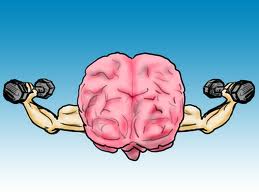
We all know instinctively that with exercise, we get better. Running, jumping, swimming, all that stuff makes us fitter, healthier, but it takes time and effort, and we are all busy.
Busy doing what? Besides, running is boring, sweaty, and bad for the knees.
We also know that going to school is supposed to teach us stuff that is useable in life, like how to solve a quadratic equation. Last time I did that was 5 minutes before I forgot how to do it, 45 years ago, so perhaps not such a great life skill, for me at least.
However, exercising our brain, our idea muscle if you like seems pretty important however, you think about it.
A friend of mine is stricken by a form of muscular dystrophy, debilitating and dehumanising physically, but rather than becoming despondent and reclusive, she has sought places where she can exercise the only muscle unaffected by the physical depreciation, her brain.
Creative, interesting, engaging, hugely knowledgeable, and with a couple of extra languages over the last decade, she has exercised her idea muscle in a way that would not have happened, she assures me, without the affliction.
In a world that is changing before our eyes at a rate unprecedented in history, where jobs for life are no longer, ambiguity and uncertainty are increasing exponentially, surely we need to consider what exercises we should be taking and teaching that make our idea muscles fitter.
Most certainly, we should be teaching our kids how to exercise this muscle, they will need it more than we ever did.
Jan 17, 2014 | Communication, Customers, Marketing, Sales, Small business

Every day I get stuff by email that purports to make me some sort of compelling offer, something that some dill out there kids himself (herself?) that I need.
It often starts:
Dear Alan (wrong spelling)
I am the CEO of Buttstuffers & Co, we are experts at something that we know will add 50% to your bottom line. Hopefully you are the right person for us to talk to. (I do not care who is the CEO of Buttstuffers, I do not know who they are, what they do, all I care about is how in hell they got my name, and yes, I am the right person, because I can ignore you, or more satisfyingly, tell you to piss off)
I would like to offer you a free ???????????, guaranteed to work for you, just to demonstrate our goodwill. (too late, my quotient of goodwill disappeared when you misspelt my name, and since then you have just managed to annoy me)
Download our free whitepaper now for more information. (Why would I do that, all it does is confirm an email address, and give you more information to throw more crap at me that demonstrates you are simply full of it)
We are experts at:
Marketing automation
Marketing ROI
SEO
Creating client relationships
Etc,etc.etc.
(If you were expert in any of this, which I seriously doubt, you would not have sent me this. In former times, you would be selling snake oil)
It gets really tiresome, marketing flatulence like this just gives those of us who genuinely care about what you think, and how your business can improve, and how our expertise and experience may assist, a bad name.
I tell my clients it is part of the price we pay for the tools that the web delivers, but nevertheless, flatulence smells bad irrespective of the cause.



