Jan 20, 2014 | Change, Governance, Marketing
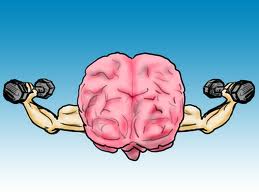
We all know instinctively that with exercise, we get better. Running, jumping, swimming, all that stuff makes us fitter, healthier, but it takes time and effort, and we are all busy.
Busy doing what? Besides, running is boring, sweaty, and bad for the knees.
We also know that going to school is supposed to teach us stuff that is useable in life, like how to solve a quadratic equation. Last time I did that was 5 minutes before I forgot how to do it, 45 years ago, so perhaps not such a great life skill, for me at least.
However, exercising our brain, our idea muscle if you like seems pretty important however, you think about it.
A friend of mine is stricken by a form of muscular dystrophy, debilitating and dehumanising physically, but rather than becoming despondent and reclusive, she has sought places where she can exercise the only muscle unaffected by the physical depreciation, her brain.
Creative, interesting, engaging, hugely knowledgeable, and with a couple of extra languages over the last decade, she has exercised her idea muscle in a way that would not have happened, she assures me, without the affliction.
In a world that is changing before our eyes at a rate unprecedented in history, where jobs for life are no longer, ambiguity and uncertainty are increasing exponentially, surely we need to consider what exercises we should be taking and teaching that make our idea muscles fitter.
Most certainly, we should be teaching our kids how to exercise this muscle, they will need it more than we ever did.
Jan 16, 2014 | Change, Governance, Leadership, Personal Rant

Most business leaders are familiar with the notion of return on capital, funds invested, etc, and those same leaders often say something along the lines of “our people are our most important asset” weather they believe it of r not, behave like it is the truth or not.
However, here is the rub of 2014.
Our machines are becoming rapidly more capable. Apple launched the iphone in 2007, and the App store a year later, creating a revolution that is evolving and spreading at huge speed, disrupting everything in its path.
Forget Angry Birds, the nonsense hit game of 2011, and its ilk, but look at the way Apps are being used in medical science, geo location, and a thousand other places, disrupting as they go.
As this all progresses, the machines take over from people, the gap between the smart, innovative, educated and creative people and the rest is widening.
On average we are degrading the value of the people around us, an increasingly small number are hugely valuable, the rest are being replaced, the return on capital is increasing, the return on people is decreasing.
I do not think it is 1984 yet, but leaders should be adding the calculation of return on humans into their strategic matrices as they plan the next 3-5 years capability building initiatives.
Of greater concern should be the social consequences of this trend, and the steps our communities should be taking to address the problems that will become generational, way, way beyond an election cycle.
Wake up Canberra, and the rest of our closeted, self interested pollies.
Jan 7, 2014 | Change, Governance, Personal Rant, Strategy

courtesy Owen Wilson
I am up around Armidale in the North of the state, yakking to a few contacts, a few people I have worked with over the years, and some potential clients.
Nice area, good, although demanding agricultural land, long history of agricultural productivity and initiative, great potential as a tourist destination with the variety of environments, products and enterprises, and with the advantage of the university, which always adds diversity and intellectual depth to the life of a town.
Problem is, the place seems to be dying.
Perhaps it is just the superficial view of an occasional visitor, informed only by his eyes, and the anecdotes and woes of the small group of people he interacts with, but nevertheless, a compelling picture.
The summer has been unusually hot, records have been set and broken, there was little winter rain last year, a short dump in early spring that moved things along, but nothing since. Stock is now being moved out or dumped onto the market because there is no feed on the ground, harvests have been marginal, and the farmers are not looking forward to the next conversation with their banks.
Meanwhile, the public sector fiddling goes on, clogging the arteries of enterprise in the pursuit of saving us from ourselves. One semi retired farmer up here wanted to put a BnB and farm stay facilities on his property, a lovely spot 30k’s out of town. It took 6 months to get a DA from the council, which was meanwhile commissioning reports on what was needed to develop tourism.
Duh!
This is just a microcosm of what is happening all around us.
Unless we start actually doing something about the causes of the problems facing us, instead of always focussing on mitigating and treating the symptoms, we will be truly stuffed, perhaps not in my lifetime, but certainly in that of my children.
We need to stop talking, blaming ,deferring and avoiding, and start doing useful, productive stuff.
Dec 30, 2013 | Customers, Governance, Leadership, Strategy

Just before Christmas, in an unusually hot and humid period, I was attacked by “mossies” while sleeping. The blighters feasted on my left shoulder, leaving a very itchy area.
So what you ask, and fair enough to wonder at the relevance.
It occurred to me that it was a nice metaphor for the “strategic itch” that seems to occur in many enterprises around this time of year. Someone, usually the CEO, gets a mossie in his ear about strategy, which results in everyone putting in an effort to redo the stuff that was probably done last year, a few updated numbers, some new graphs, and a reaffirmation of some vision and mission statements. All this of course culminating in an off-site 2 day meeting that involves a bad head-ache on the second morning.
The itch is scratched for another year, there are some “decisions” that are incorporated into the budget process, but little of real value has been achieved.
Just as scratching the mossie bites on my shoulder offered short term relief, but had little impact on the time it took for the itch to go away, and indeed ran the risk of causing some longer term problems if infection set in, so does the yearly strategic meeting do little, but potentially causes problems.So, here are a few “do’s and don’ts” that may remove the causes of the itch.
Do:
• Identify and consider the drivers of performance and change in your industry
• Consider how your current capabilities are lined up against these drivers, identify gaps, and agree how to address them.
• Review and consider your responses to the value propositions of your competitors, and consider what you would do to you, if you were them.
• Re-acquaint yourself with your customers, ensure you know why they buy from you and not others, and consider the manner in which you build relationships with them.
• Spend time identifying the “cause and effect” chains in your business, and how you can make them more visible, efficient, manageable, and accountable.
• Do a bit of “what if” scenario planning, the more out of the box the better
• Have some different people, from both inside and outside the enterprise in the process and at the meeting to avoid just continuing status quo thinking.
• Remember that innovation capability is about the only sustainable competitive advantage left to us, so consider how best to build the capability to innovate, without worrying too much about that new product in the pipeline.
• Agree a small set of KPI’s that reflect the most important things you considered, and ensure the processes are in place, or at least agreed to measure and communicate performance against them.
• Make sure everyone in the enterprise understands the priorities, and the underlying logic of the priorities, in other words, achieve alignment throughout the business.
Do not:
• Concentrate on the numbers, these days they are too easily generated and tend to remove the motivation to think.
• Allow status to be a determining factor in the importance given to every individuals contribution to the conversation
• Shy away from difficult, or confronting people or conversations.
• Think that all the answers to tough questions can be arrived at in the meeting.
• Think the job is done when the conversation ends. You get 1/10 for talking, the other 9 for doing.
• Think that this is a one-off, annual event. Strategy planning and review processes should be at the heart of enterprise governance, and are an ongoing challenge, particularly for boards.
Have a good strategy meeting.
Dec 16, 2013 | Branding, Governance, Management, Strategy

For perhaps the 1,000th time last week I heard the “strategy” question asked. It comes in many forms:
What is your customer strategy?
What is your google strategy?
What is your social media strategy? and so on.
All are valid questions, but the implication is that there is a different strategy for every bloody thing that is faced by a business, which to my mind is a degradation, perhaps commoditisation of the meaning of the word as it should (in my view) be practised. This type of usage is about the implementation of strategy, the manner in which you go about achieving the strategic outcomes desired, not about the formulation of the drivers of performance over the long term.
Equally, having an annual “strategic workshop” that sets strategy for the year is a nonsense, well, at best a budgeting session by another name.
“Strategy” is at once simpler, and more complicated than that, and comes down to five really challenging questions that must be lived, every day, by all in the enterprise. They are not the subject of some crappy off-site gab-fest in the slow sales period of the year if you are serious.
- What is the business we are in? (the old are we selling drills, or 20mm holes question, probably the most undervalued, and original marketing question)
- What does the enterprise do to add value?
- What are the behavioural drivers of the primary customers we are seeking to service
- What is our value proposition to these customers and potential customers?
- What capabilities are crucial, now and into the future, and how do we develop them to be differentiated?
When was the last time you seriously asked yourself any of these?
Dec 2, 2013 | Change, Governance

So, the Treasurer has blocked the acquisition of Graincorp by Archer Daniels Midland. However, the acquisition of Warrnambool Cheese and Butter by Canadian group Saputo is OK.
Go figure!
These two businesses are amongst the last significant, strategically important agribusiness assets left in Australian hands, they are subject to the same rules, same laws, yet the political outcome is different.
Why?
Irrespective of your position on the rights and wrongs of these two proposed transactions the fact that there is a different outcome from the political deliberations must be of concern. I have not heard any logical arguments that lead to a conclusion that the outcomes should be different, and can only assume it comes from political expediency, hypocrisy and hubris rather than a dispassionate application of he laws meant to govern us.
The other reason I am pissed off with this decision is that I lost a $50 bet. I was certain that after the approval of the Saputo takeover of WCB in October, that the precedent provided would be sufficient for the Treasurer to ignore the silly blathering of Warren Truss, and acerbic tongue and threats of Barnaby Joyce, and be consistent.
Not so it seems.
There are reasonable, logical and economically and socially defensible arguments on both sides of the question, and inevitably not everyone would have been happy with a consistent decision, but those observing the behaviour of the government will scratching their heads at the inconsistency.
I do however look forward to the smug, self-congratulatory remarks of Mr Truss who I expect will sound like George Pell on Rohypnol, I need to lose some weight, and this may help.



