Oct 21, 2013 | Communication, Governance, Lean, Operations

I had a post prepared for this morning, relating to the evolution of “local” agriculture, specifically around Sydney.
However, the events of the weekend, the burning of Sydney’s surrounding bushland, including several of the farms of those I have been talking to, seems to make everything else trivial by comparison. Getting your head around the scale of the fire disaster facing us is difficult, for most of us, most of the time, as it is no-one close to us who is affected, so can be pushed aside as we go about our business.
This morning is different.
Walk outside your comfy suburban home, and look at the sky, smell the smoke, observe the odd orange light, and you just know this is different, it is not just another Sydney summer bushfire. Hurts to wonder what may happen when summer actually gets here.
As we watch and listen to the news reports, there is a huge application of technology and human effort to managing the logistics of the fire-fighting effort, but one shot on a news report caught my attention. Behind all the activity of the control centre, the people on phones and computers, handling reports and updates, stood a big whiteboard, what appeared to be a visual record of the fires, their relative risk, resources deployed, resources expected and in reserve.
It always happens, people relate to visual material, when under pressure, a picture can immediately summarise a situation that words alone cannot, so they tend to gravitate to pictures, or a whiteboard in a large group situation, something that can be kept up to date in real time, that all people who need to see it, can see it as it evolves. The whiteboard is perhaps the best collaboration tool ever invented.
When the fires are out, the cleanup someone elses problem, and the inevitable wrangling with insurance is the news topic of the day, the lessons of visual should remain with all of us as we go about improving the way we go about achieving goals.
Our thoughts go to all those who have been impacted by the fires, ands will be over the next few days as the fires continue to ravage Sydney’s bush outskirts. Our grateful thanks for the courage, and committment of the “fireies”
Oct 17, 2013 | Branding, Category, Customers, Innovation, Marketing

Cottage cheese is a pretty dull category in supermarkets. A relatively tasteless, low calorie (therefore it must taste crappy, right?), price competitive, group of products.
Yes, so we thought.
Years ago, 25 years in fact, I was the GM Marketing of a major Australian diary company with the leading brand of Cottage cheese. I thought all of the above, and we struggled to make any return, let alone one that was a competitive use of the capital tied up.
We had very good data, for the time, remembering this is pre-internet. We knew who sold our, and competitive brands in what quantities, and pretty much to whom, as we had good U&A (usage and attitude) data. As a result we were able to segment the market pretty well by usage, demographics, geography, and basket. However, whatever we did, we had trouble moving the sales needle.
Almost as a last resort, we ran a small recipe competition on the side of the packs, easy, low cost, a prize draw of a holiday at a health resort on the Gold Coast. We got a few hundred entries, a failure by our pre-agreed metrics, so we thought we knew something else that did not work. However, because there were so few, we took the time (there was a young work experience person to utilise at the time) to write back to all the entrants saying thanks for entering, and sending them a few of the top recipes we had received, just to be polite.
The response astonished us.
A very high number wrote back saying thanks for the recipes, and telling us how they used the products, what was right and wrong about them, all sorts of information we did not have, or had not thought was relevant.
Turned out, cottage cheese was not a “calorie avoidance food” it had uses in all sorts of areas by all sorts of people we had not seen as in our market, in fact, had not considered. The job we assumed was being done by cottage cheese, deduced by looking at our data, from our perspective, was not the job that consumers were hiring the product to do.
Long story short, we slowly built a database, all done by hand and snail mail, so it was a significant resource sink, a cottage cheese club in effect that shared recipes, stories, and funny events. All pretty mundane these days with the tools available, but a major undertaking in 1988.
Our sales went up, our promotional spend with retailers dropped, our price sensitivity reduced significantly, and had several successful range extensions, and we suddenly were making very good returns.
The moral is, make sure you understand the job that consumers hire your product to do, make sure you see it through the consumers eyes, not yours.
Oh, and two more lessons,
1. Social media marketing is not new, just the tools now availabel make it easier, so now everybody is doing it.
2. Cottage cheese is really very nice, 20 years after leaving the company, i still buy and use the product, in all sorts of odd ways, learnt from the “clubbies”. Brand building by another name.
Oct 15, 2013 | Marketing, Social Media
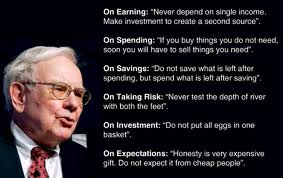
Wisdom of Warren Buffett
We are rushing headlong towards automating the marketing process, everything from the call centre systems to advanced automation like Marketo and others. However, we are social animals, and no matter how much we set out to automate, you simply cannot replace the eyeball to eyeball impact of personal meetings, creating a paradox.
There is an ad in the current HBR magazine, a portrait of Warren Buffett asking “Ever give a firm handshake over a speaker phone”? Warren is known for asking the key question, of breaking complications down to their core elements, and valuing simplicity. Marketing automation is far from simple, leveraging as it does, assumptions built into strings of algorithms, driving automatic responses.
The real benefit of the tech solutions are the opportunities the tools offer for productivity improvements in the way we use our time to prospect, engage, and sometimes transact, but it will always take a person to take an automated exchange, and turn it into the process that leads to a human relationship.
The old metaphor of using a hammer to drive a nail, not a screwdriver applies in spades. The software being marketed are just tools to be used by people, some tools are better, and more appropriate than others, and the skill of the user plays a huge role.
Don’t be fooled about just how hard it is to use these tools well, and know they cannot ever take the place of personal interaction.
Oct 14, 2013 | Collaboration, Customers, Marketing, Social Media

Question: How do you know when your enterprise has become “Social”
Answer: When it evolves from a vertical, and functionally oriented enterprise with power emanating from the position descriptions, to one that is cross functional and project oriented, and power comes from capability.
It really has little to do with the deployment of social media tools, the bring your own device policies, the # at the sales conference, or the CEO’s profile on Linkedin.
Social businesses put the customer at the centre of what they do. They set out to innovate in the manner of delivery as well as the nature of the value they deliver to consumers, and they see the future sooner, and more clearly than others, simply because they are “connected” to their customers and potential customers.
Sep 27, 2013 | Customers, Innovation, Marketing, Strategy

People instinctively like consistency and predictability, it allows them to be comfortable, and make judgments without too much risk of being wrong because the status quo has been maintained.
Helping out with a competitive pitch recently I was shown a list of the things that had to be covered, a checklist for the expected content of the presentations, a list of largely irrelevant , administrative crap, and we had only 45 minutes.
With some trepidation, we threw out the list, and built a presentation that demonstrated that the agency I was working with had the experience, and capabilities to break the challenges faced by the “pitchee” down into manageable chunks that could be addressed creatively, responsibly, and with a budget that was less than the one nominated, (which we knew was not gong to be forthcoming in any event)
We knew during the conversation that followed that the business had been won, despite the ignoring of the stated ground-rules. The sorts of comments that were made were that our approach had been “fresh” and “creative” and that we had “thought outside the box” all cliché’s, but nice nevertheless. However, what it really demonstrates is the we won because we were different.
Our competitors had followed the rules, and been boring as a result, we were not boring, had taken a risk that with hindsight was not a risk at all, so we won.
So, any time you hear something that sounds like “the client made me do it” translate it as “I did not have the balls or imagination to be original, different, and interesting”.



